When is Milky Way season in Australia?
On moonless nights the bright core of the Milky Way stands clear of the horizon in Australia from February to October. It passes close to overhead everywhere: about 90° high at Bald Rock National Park, New South Wales, and about 72° at Garig Gunak Barlu National Park, Northern Territory.
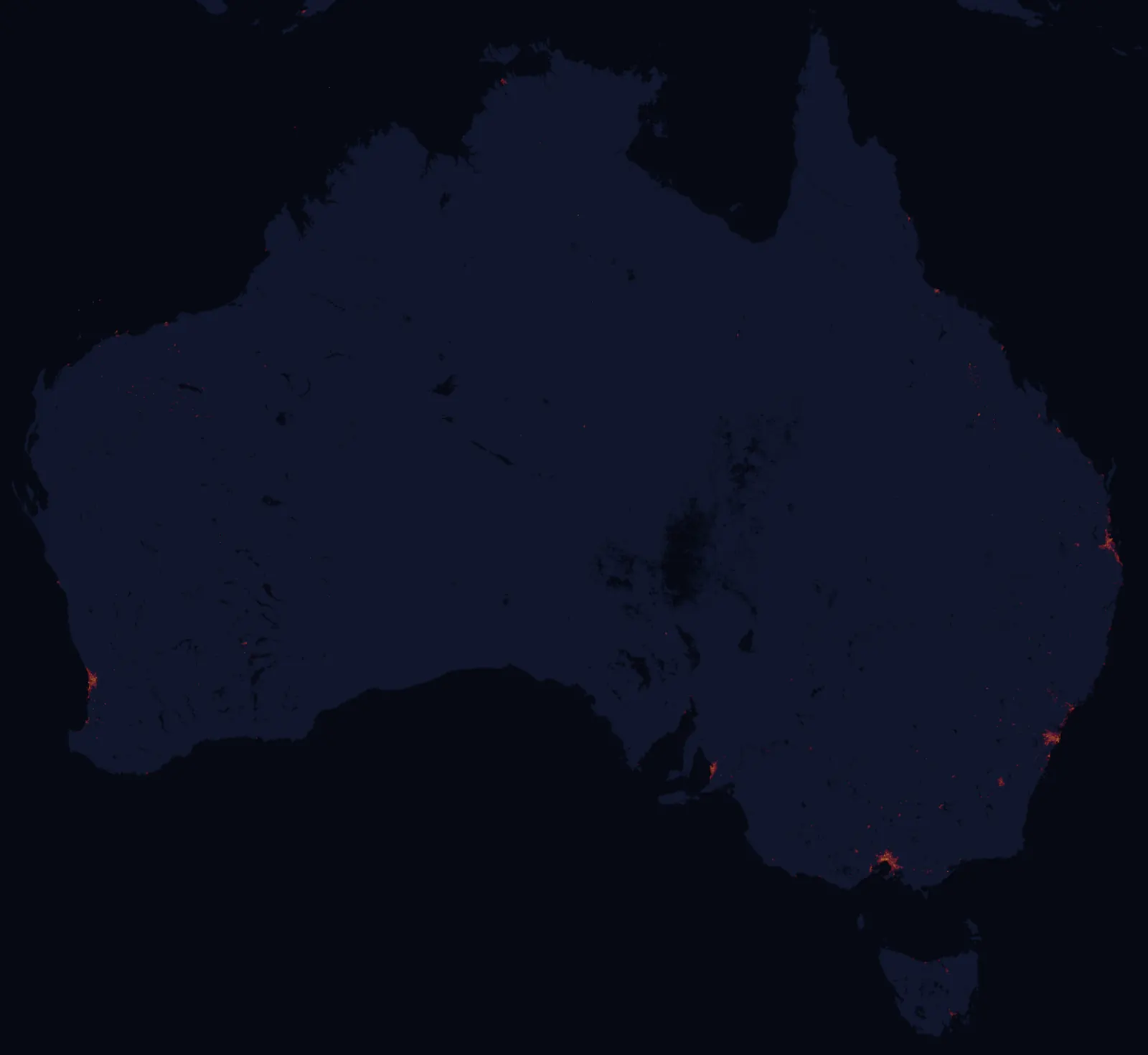
When is Milky Way season in each part of Australia?
The months when most of a region’s places have the core up, how high it climbs at its highest, the median core nights in 2027, and the darkest place to see it from.
| State or region | Season | Core height | Nights in 2027 | Darkest place to see it |
|---|---|---|---|---|
| New South Wales | February to October | up to 90° | 182 | Sturt National ParkBortle 2, 183 nights |
| Queensland | February to October | up to 90° | 182 | Alton National ParkBortle 2, 182 nights |
| South Australia | February to October | up to 90° | 182 | Gawler Ranges National ParkBortle 2, 183 nights |
| Tasmania | February to October | up to 78° | 182 | Mount William National ParkBortle 2, 182 nights |
| Victoria | February to October | up to 85° | 182 | Croajingolong National ParkBortle 2, 182 nights |
| Western Australia | February to October | up to 90° | 182 | Cape Arid National ParkBortle 2, 181 nights |
| Australian Capital Territory | February to October | up to 84° | 181 | Namadgi National ParkBortle 4, 181 nights |
| Northern Territory | February to October | up to 86° | 181 | Dulcie Range National ParkBortle 2, 182 nights |
The darkest places in Australia with the most Milky Way nights
Bortle 1 to 3 places, by nights in 2027 with the core more than 10° up for an hour of moonless darkness.
- Warrumbungle National Park New South Wales · Bortle 2 · core up to 88°184 nights
- Ikara-Flinders Ranges National Park South Australia · Bortle 2 · core up to 88°184 nights
- Mount Royal National Park New South Wales · Bortle 3 · core up to 87°184 nights
- Cape Le Grand National Park Western Australia · Bortle 2 · core up to 85°184 nights
- Fitzgerald River National Park Western Australia · Bortle 2 · core up to 85°184 nights
- Diamantina National Park Queensland · Bortle 2 · core up to 84°184 nights
- Grampians (Gariwerd) National Park Victoria · Bortle 3 · core up to 82°184 nights
- Sturt National Park New South Wales · Bortle 2 · core up to 90°183 nights
- Gibraltar Range National Park New South Wales · Bortle 2 · core up to 89°183 nights
- Arkaroola South Australia · Bortle 2 · core up to 89°183 nights
Which months have the most Milky Way nights in Australia?
The median place has the core up on the most moonless nights in May. South of the equator the core rises before dawn in autumn, is up most of the winter night and sets in the evening by spring; each place page lists its own nights and the 2027 new moons.
How the Milky Way dates for Australia are calculated
The positions of the sun, the moon and the center of the Milky Way are calculated for every night of 2027 at each place. A night counts when the core stands more than 10° above the horizon for at least an hour while the sun is more than 18° below the horizon and the moon has set. These are calculated positions; whether a night is clear is only known closer to the date. How it works